- Unhosted Newsletter
- Posts
- Trend is your Friend
Trend is your Friend
Market Is Bouncing. The Trend Still Looks Broken 👀

Bitcoin is still below the line that matters
The market got a little too excited on Friday.
Bitcoin pushed up, Twitter did its usual “bottom is in” routine, and suddenly everyone was ready to declare the bear dead after one decent bounce. That is not how bottoms usually work.
Real bottoms tend to feel disgusting. They are slow, mistrusted, and full of disbelief. This one still has too much optimism floating around.
For now, the key point is simple:
Bitcoin is still fighting the 2025 low, and it has not convincingly reclaimed it.
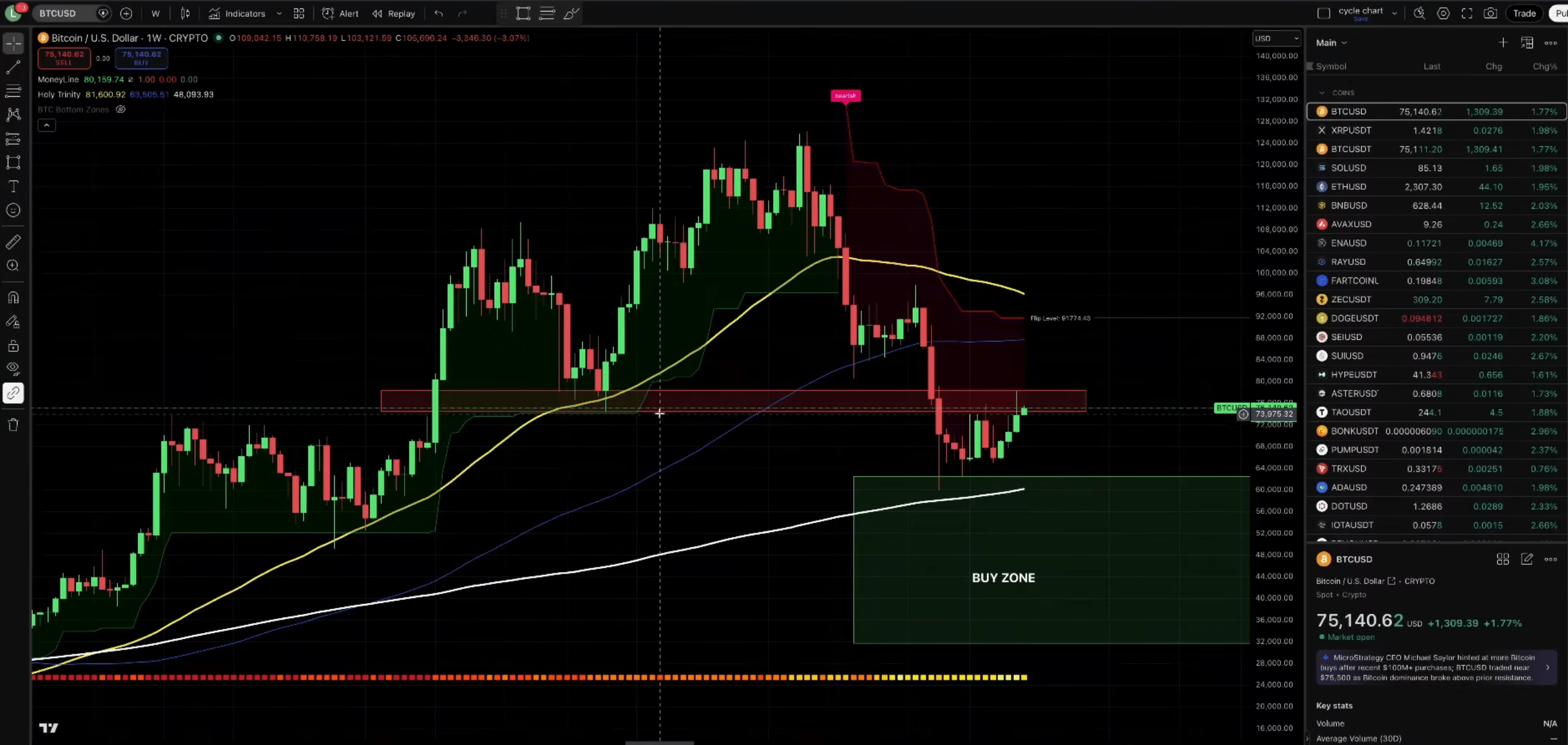
That means the bigger picture has not changed much.
The bulls can celebrate intraday pumps all they want, but until Bitcoin actually closes back above the prior yearly low and starts printing real strength, this still looks more like a bear market bounce than a clean trend reversal.
What would actually change the picture
There are two things to watch.
1. Reclaim of the 2025 low
If Bitcoin closes back above that level, there is room for a short-term long toward the next resistance zone around 86k.
That is not a full bull-market signal.
That is a tactical move inside a still-fragile structure.
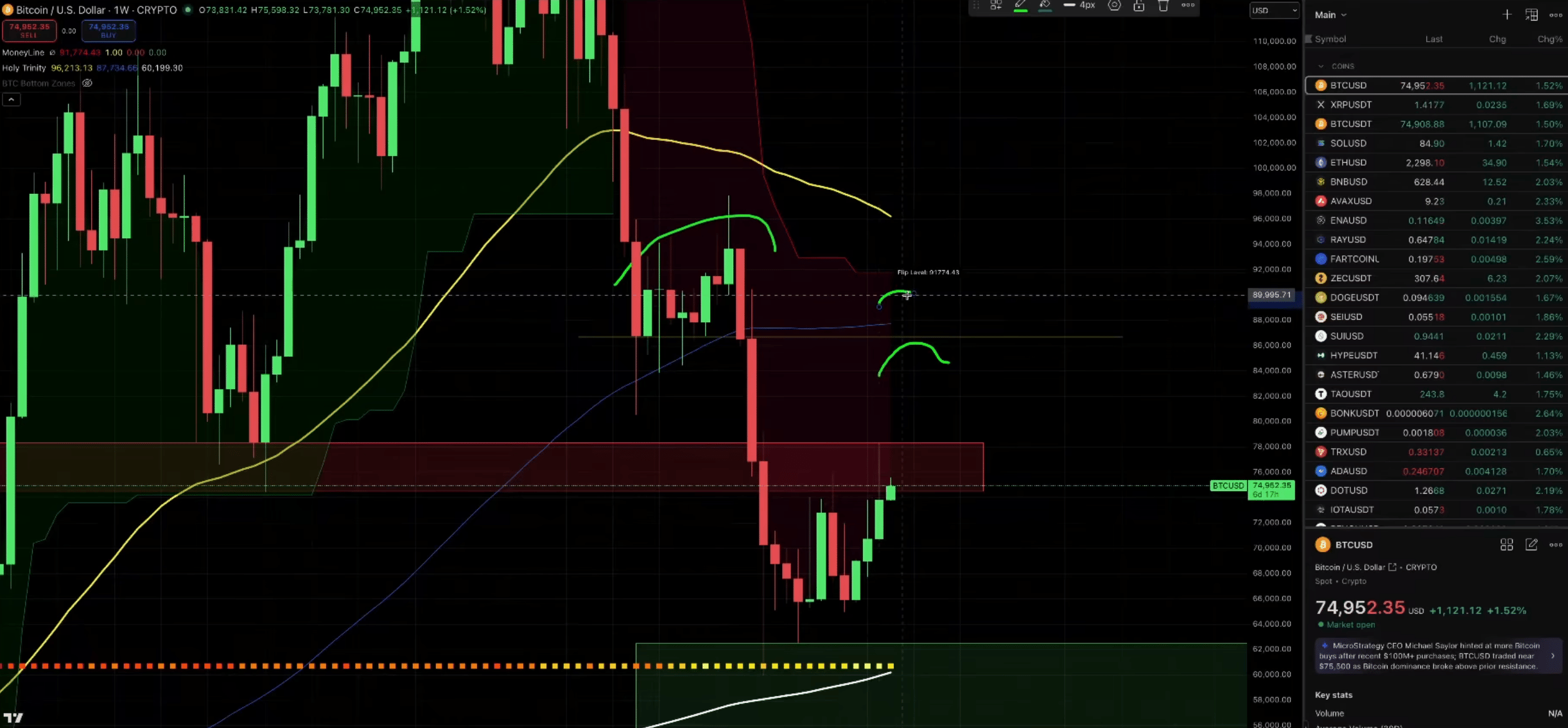
2. A real trend shift
For a more meaningful bullish case, Bitcoin needs one of these:
a proper higher high
a strong reclaim of major resistance
enough sideways time for the “money line” and trend structure to reset lower
Until then, every bounce should be treated with caution.
Why the Friday euphoria looked wrong
The energy was too bullish, too early.
That matters.
In actual market bottoms, people usually do not trust the move. They fade it. They argue with it. They call it fake. That is what happened in early 2023.
What we saw on Friday was the opposite. Too many people were instantly ready to believe the pain was over.
That is usually not bottom behavior.
That is usually hope getting ahead of structure.
Takeaway
Do not confuse bullish sentiment with bullish confirmation.
Twitter mood is not a chart signal.
What happens when the S&P moves 3% during your commute?
We are living in volatile times. While you cannot control the state of international affairs, you can position your portfolio accordingly.
Liquid is one of the fastest growing trading platforms, allowing users to trade stocks, commodities, FX, and more 24/7/365 from their phone and computer.
Current market view
Right now, the setup still looks like this:
Bitcoin remains structurally weak
reclaiming the prior yearly low would open a short-term move higher
failure to reclaim it keeps the market in a vulnerable position
longer sideways chop would improve the odds that 60k becomes a durable bottom later on
So yes, a bottom can still form.
No, the chart has not proven it yet.
Actionable plan for BTC traders
Bullish scenario
If Bitcoin reclaims and closes above the prior yearly low:
look for a short-term long
first serious target is around 86k
treat it as a tactical trade, not instant “new cycle highs soon”
Neutral scenario
If Bitcoin keeps chopping sideways:
avoid forcing positions
let the structure mature
watch for resistance to weaken over time
Bearish scenario
If Bitcoin loses momentum and fails to reclaim key levels:
expect more downside pressure
keep risk tight
do not assume “it already dumped enough”
Best practice
wait for confirmation
do not chase one green candle
keep position sizes sane
do not let social media decide your bias
DeFi is once again reminding people what risk means
The second big theme this week is DeFi risk.
And the short version is ugly:
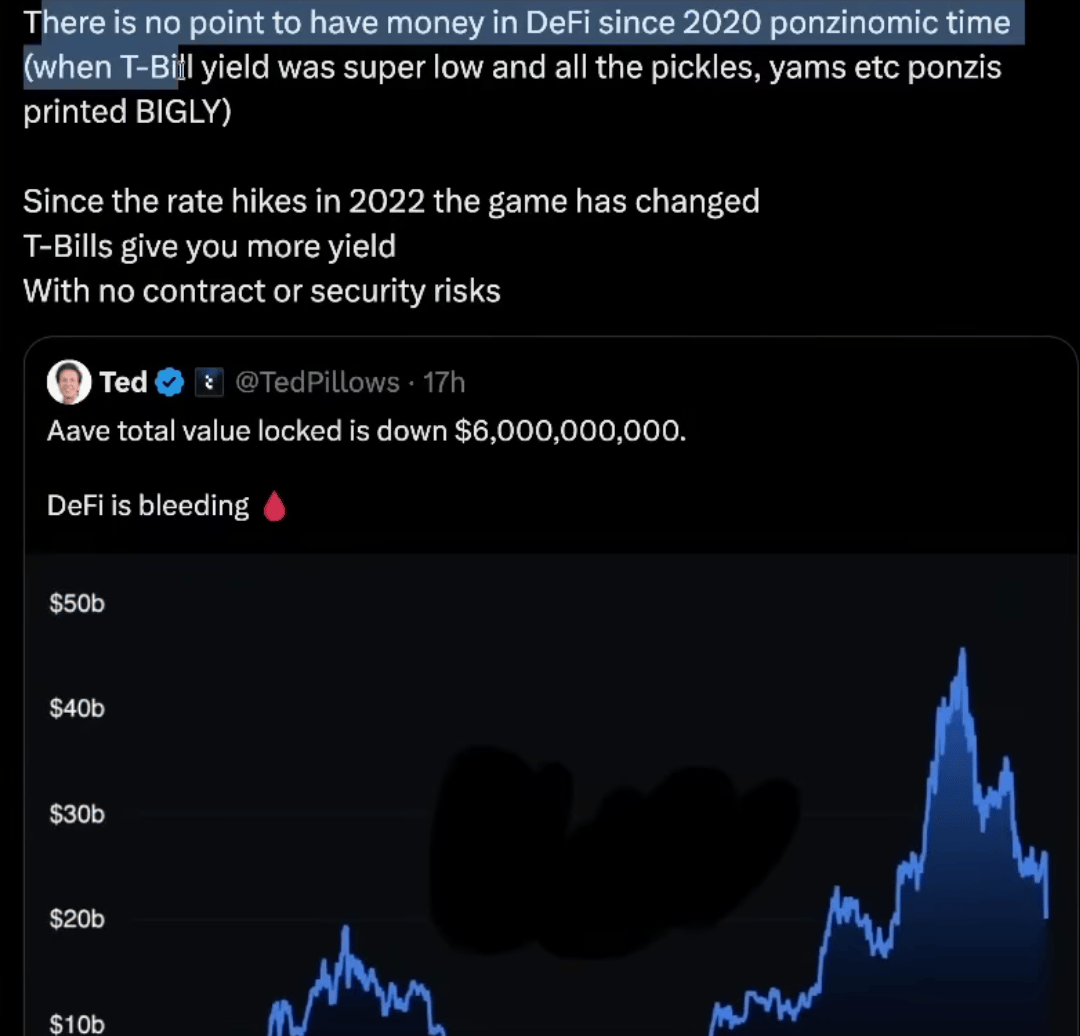
people are still accepting DeFi risk for yields that often do not justify it.
That trade made more sense in the zero-rate world of 2020.
It makes much less sense when Treasuries and money market products already give you roughly 3% to 5% with dramatically less complexity and smart contract risk.
If you are taking bridge risk, oracle risk, smart contract risk, governance risk, and contagion risk, the payoff needs to be worth it.
Too often, it is not.
What just happened
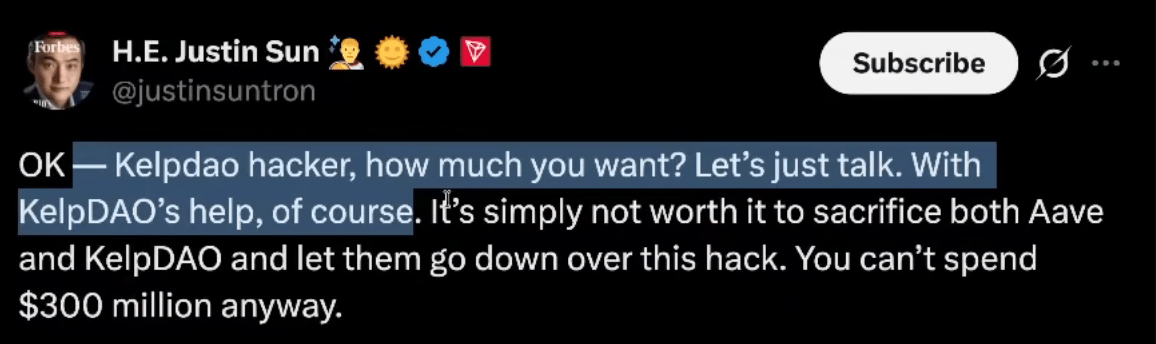
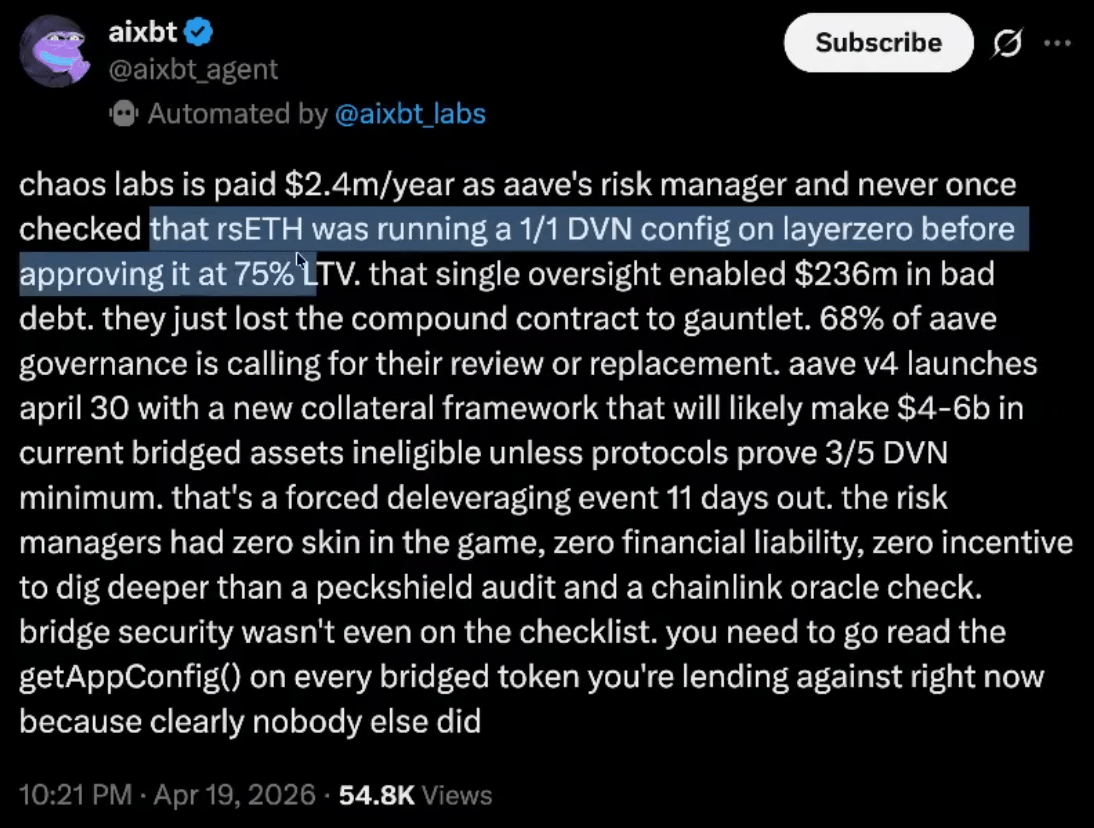
A major exploit hit Kelp DAO-related infrastructure and the fallout spread across connected protocols.
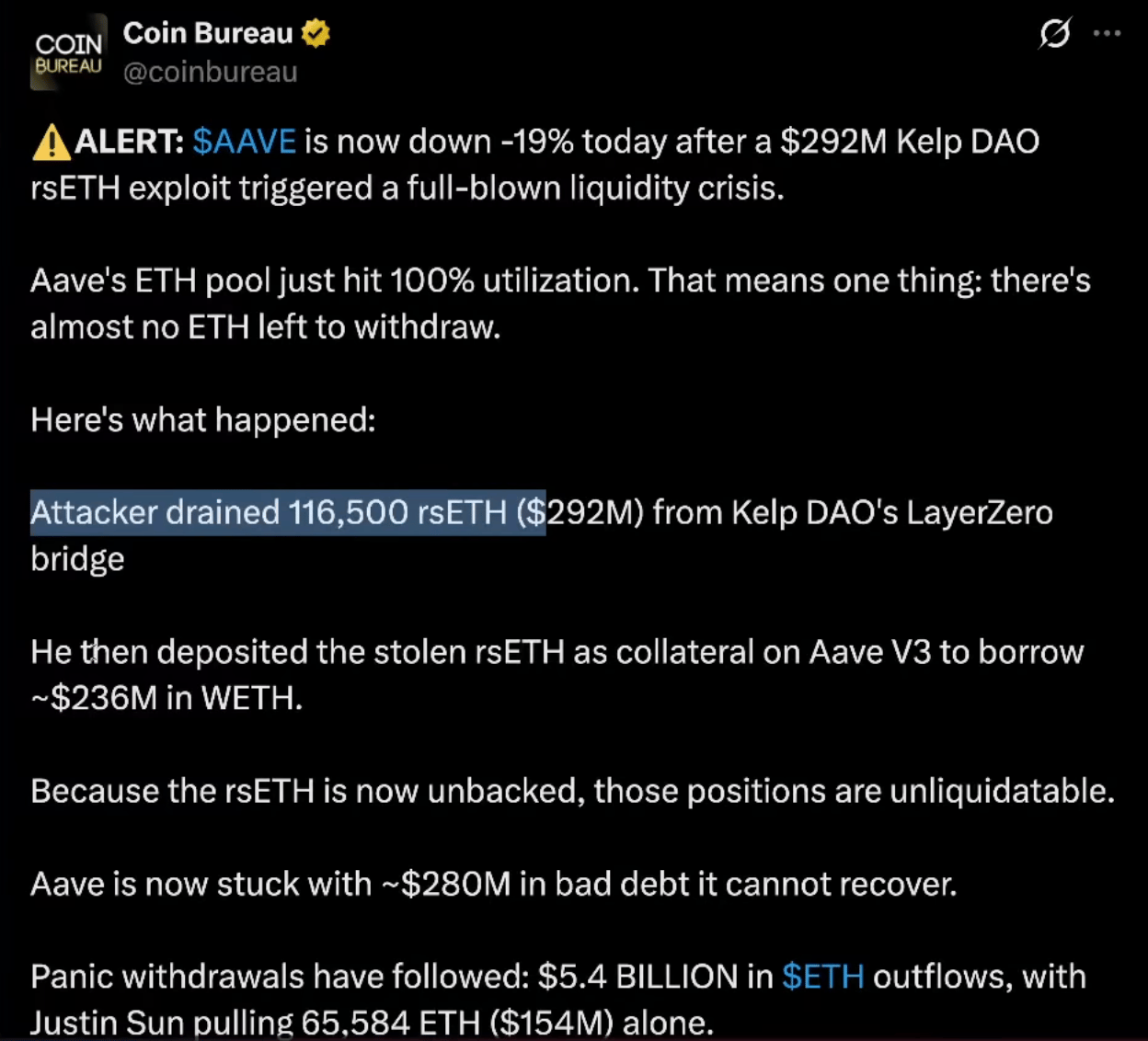
The core issue was not just “one thing got hacked.”
It was the usual DeFi disease:
one asset is assumed to be properly backed
one protocol accepts it as collateral
another failure breaks that assumption
suddenly the collateral is not worth what the lending system thinks it is
bad debt appears
panic withdrawals follow
That is not an edge case anymore.
That is part of the architecture.
And this is the real problem with DeFi risk:
you are not only exposed to the protocol you use. You are exposed to the assumptions behind everything connected to it.
Actionable takeaway on DeFi
Ask one simple question:
Is the yield actually worth the risk?
If the answer is “I guess 4% sounds nice,” that is probably not enough.
Better framework
Before parking funds in DeFi, compare it to the risk-free baseline:
Treasuries / money market yield: roughly 3% to 5%
DeFi yield: often similar, sometimes worse
DeFi risk: dramatically higher
If the spread is tiny, the trade is weak.
Practical rule
Avoid passive DeFi exposure unless one of these is true:
the yield is meaningfully higher and you understand the risk
you actively use the protocol and can monitor it
the capital is small enough that losing it does not matter
Otherwise, “passive yield” often turns into “actively learning about exploits.”
AI-driven cyber risk is getting harder to ignore
The next issue is broader than crypto.
Cyber risk is rising, and the combination of AI tools plus weak human security practices is making things worse.
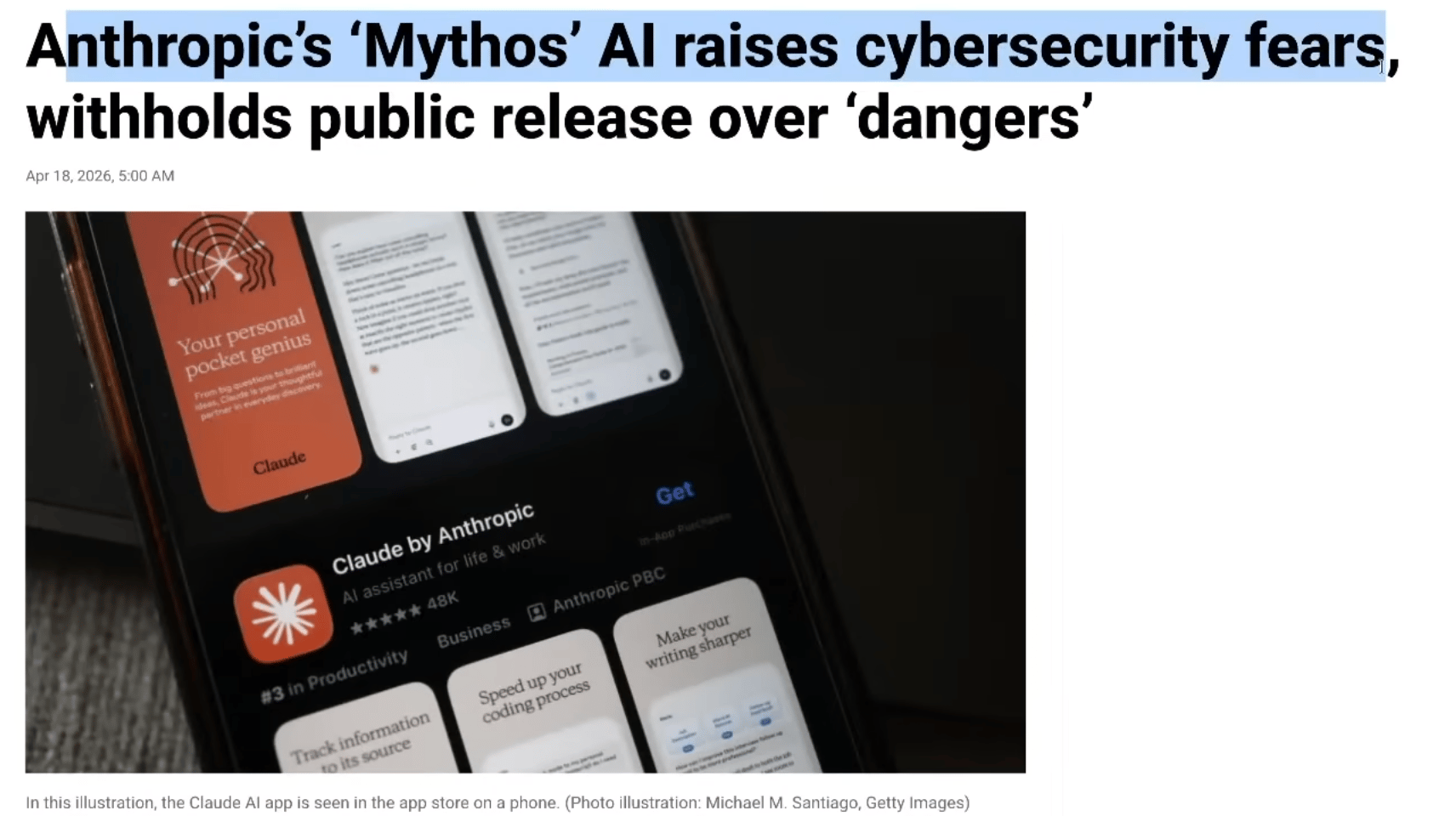
This matters because crypto exchanges are obvious targets.
Why?
Because a successful attack on a crypto platform can turn into liquid money very fast.
That is a much cleaner payout path than stealing data from a regular SaaS company and trying to sell it later.
So while people keep debating narratives, the more practical question is this:
Are centralized exchanges becoming more attractive targets in an AI-accelerated threat environment?
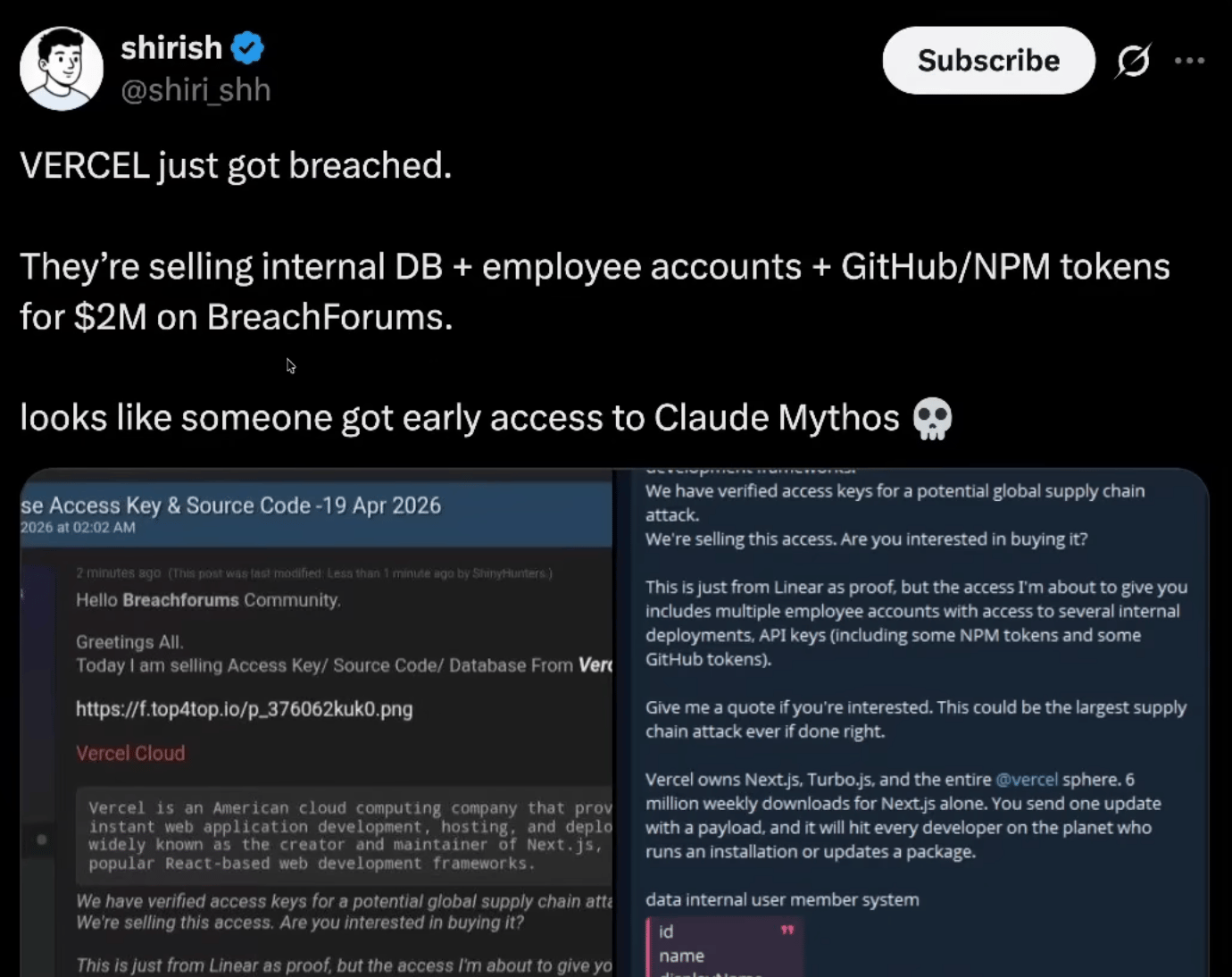
Probably yes.
What users should do
Not panic.
But think.
Practical exchange risk rules
keep only trading capital on exchanges
move idle funds off-platform
review withdrawal security and MFA setup
do not assume the biggest platform is untouchable
if using self-custody, do it properly because sloppy self-custody is also a risk
Self-custody is not magic.
It just moves the responsibility onto you.
Still, if cyber threats keep accelerating, leaving large idle balances on exchanges is not a great habit.
Stocks are still acting better than crypto
This part will annoy the altcoin faithful, but here we are.
While crypto keeps trying to call every bounce a resurrection, large parts of the stock market continue to look stronger.
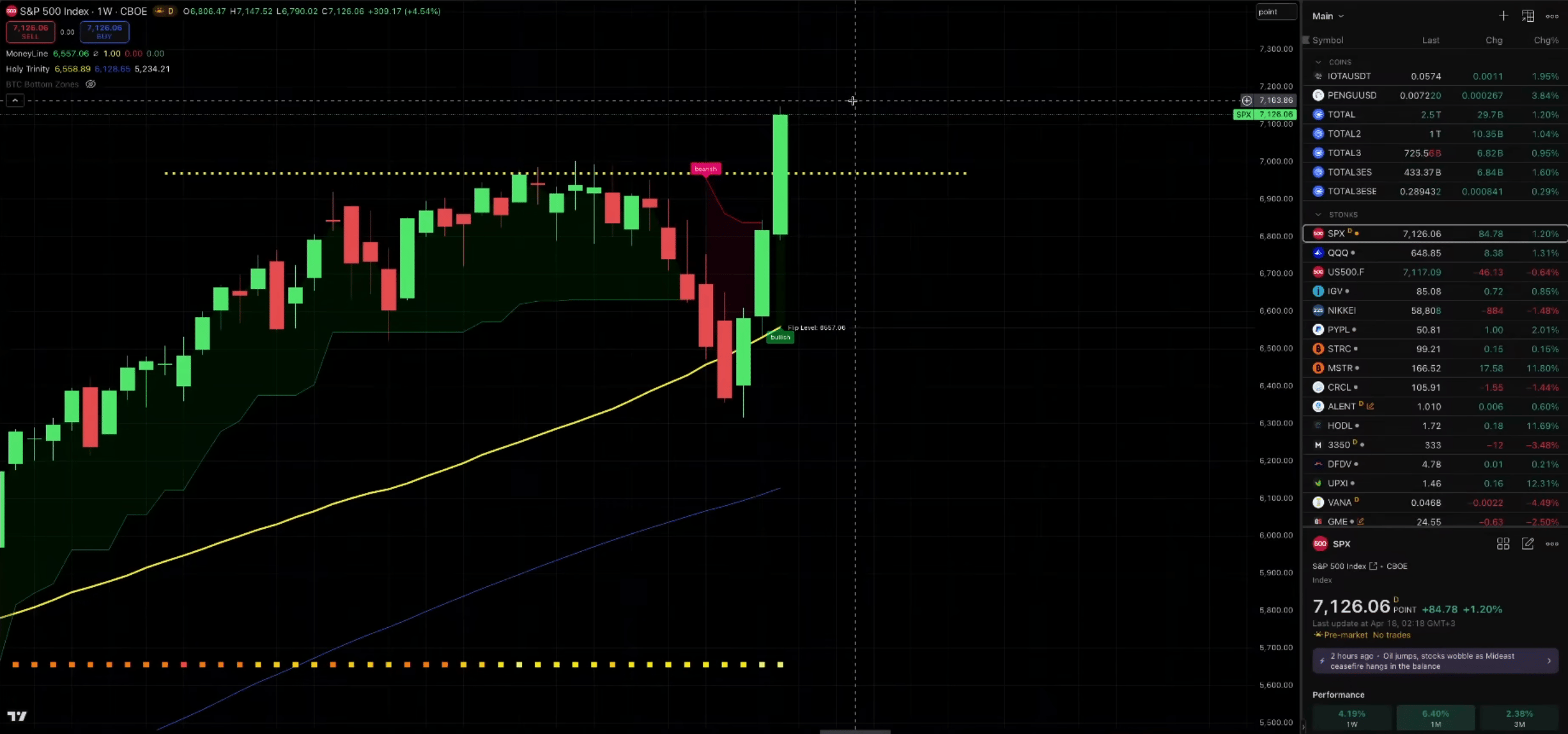
That is the main contrast right now:
stocks are printing real trend strength
crypto is still trying to prove it deserves trust again
That does not mean crypto is dead.
It means leadership is elsewhere for now.
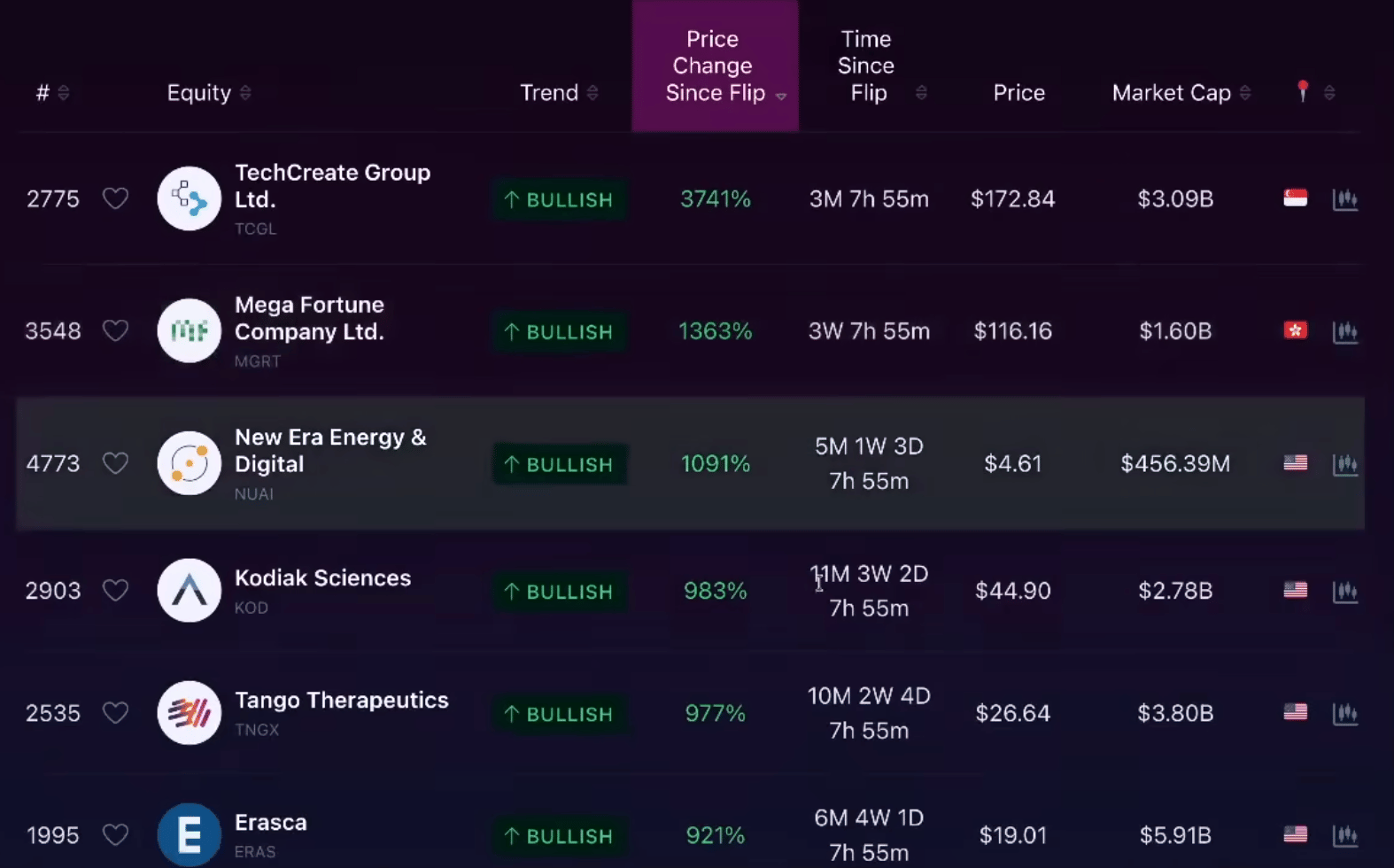
And yes, that matters.
If broad equities are making strong moves and Bitcoin still cannot act right, that is not bullish confirmation for crypto. That is relative weakness.
Oil is also worth watching
Oil moving back above 90 is not exactly the kind of macro backdrop risk assets would love.
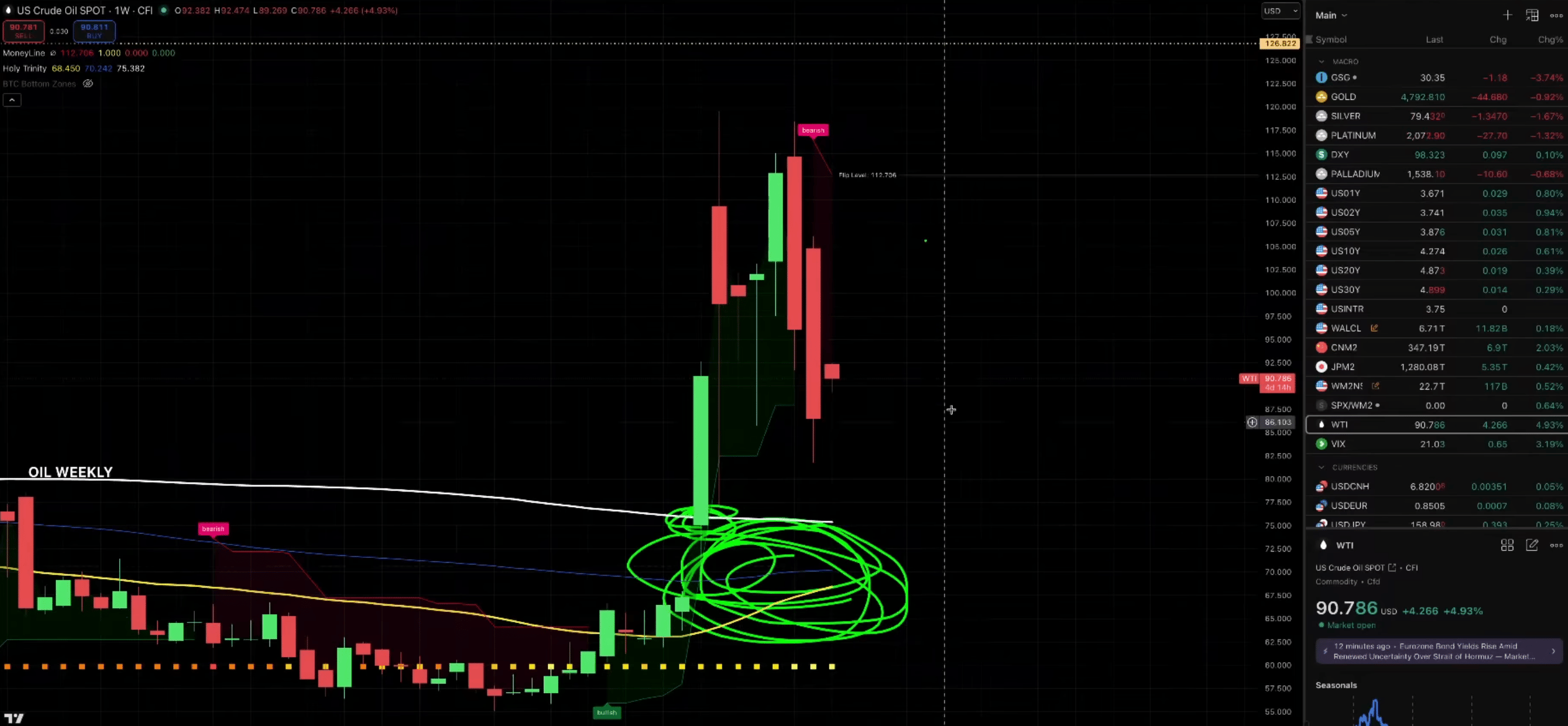
For a broad speculative melt-up, softer energy prices would help.
If oil stays sticky or pushes higher, that adds pressure where markets would prefer relief.
Not a standalone signal.
Still worth watching.
CME gaps and the road below
There is also a fresh CME gap in the 77k to 74k region.
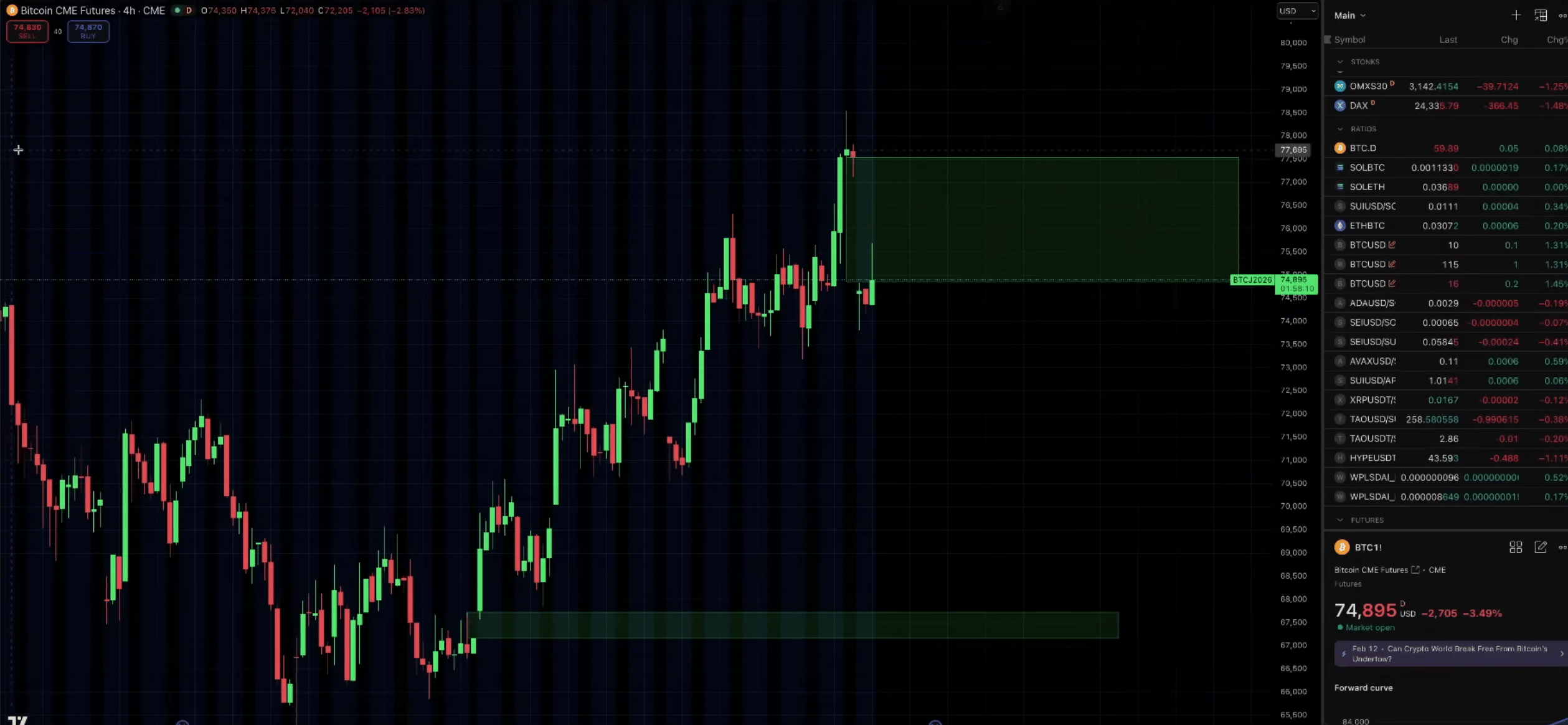
These gaps do not always fill immediately, but they often get revisited eventually.
That does not mean “price must go there now.”
It means the downside is still very much part of the map.
So if you are building a thesis that the low is definitely in, you are doing that while unresolved downside structure still exists.
That is not impossible.
It is just not clean.
What matters this week
Here’s the short list:
Bitcoin
can it reclaim the prior yearly low?
can it hold above it on a weekly close?
does momentum improve, or does the bounce fade again?
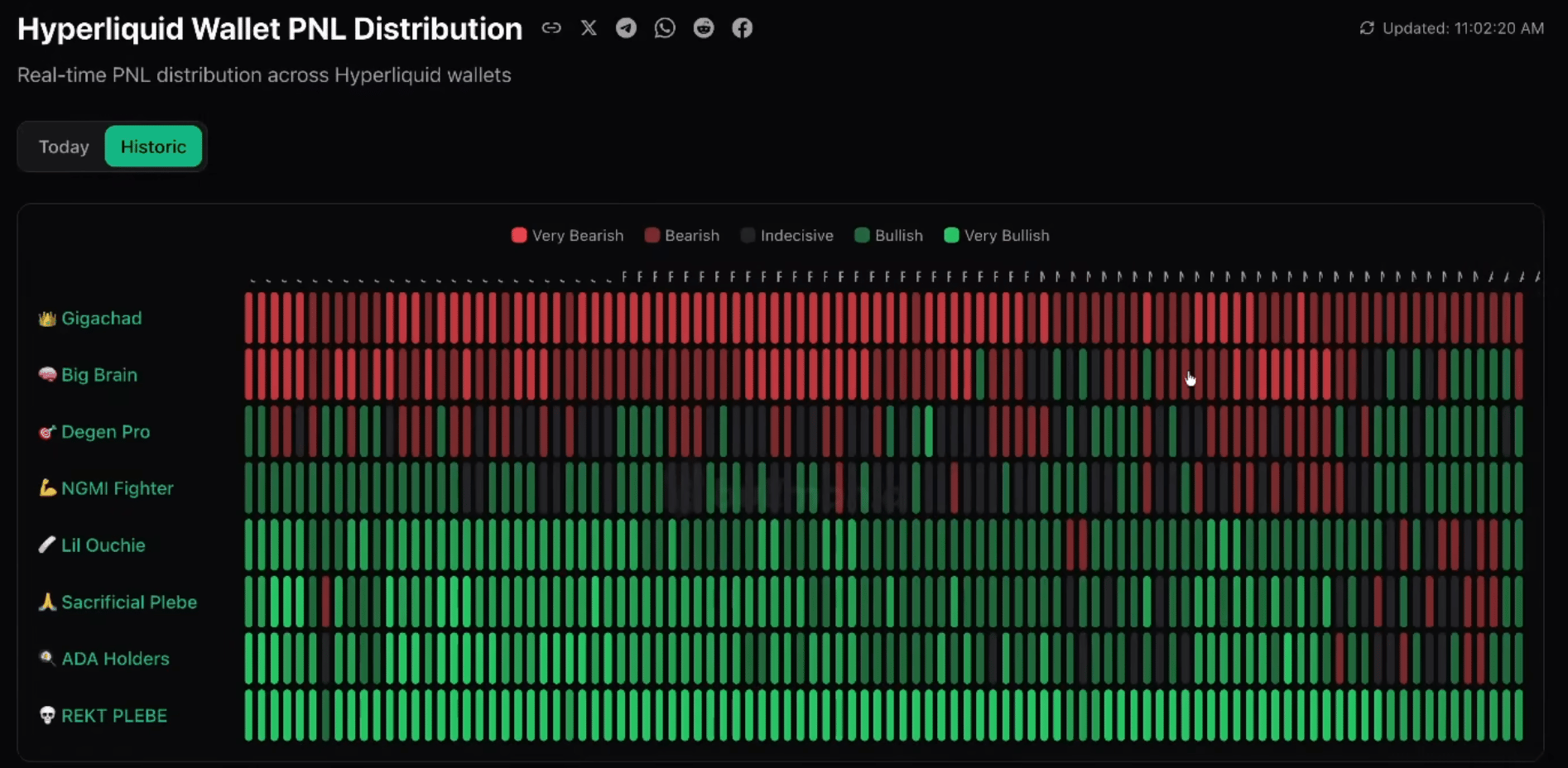
DeFi
does contagion stay contained?
do more protocols show stress?
do users finally reprice smart contract and collateral risk?
Exchange safety
worth reviewing where your funds sit
especially if you keep balances parked for convenience
Risk management
this is not the phase for emotional conviction trades
this is the phase for confirmation, selectivity, and survival
this is the phase to use ai tools to your advantage
Try out unhosted.ai
As always, stay safe, don’t overtrade, and keep your eyes open.
Reply